See structure in characters
Chinese Radicals vs Phonetic Components: What Each Part Tells You
Learn the difference between radicals and phonetic components, how semantic-phonetic characters work, and how components support memory.
Chinese characters are not random drawings. Many are built from reusable components that suggest meaning, pronunciation, or both. Recognizing those components reduces the visual load of a new character and gives you clues for remembering it.
The terms radical and component are sometimes used loosely in learning materials. A radical is traditionally the indexing component used to classify a character in a dictionary. A phonetic component is a part that provides a clue to pronunciation. Either one can also be a complete character in another context.
What a radical can tell you
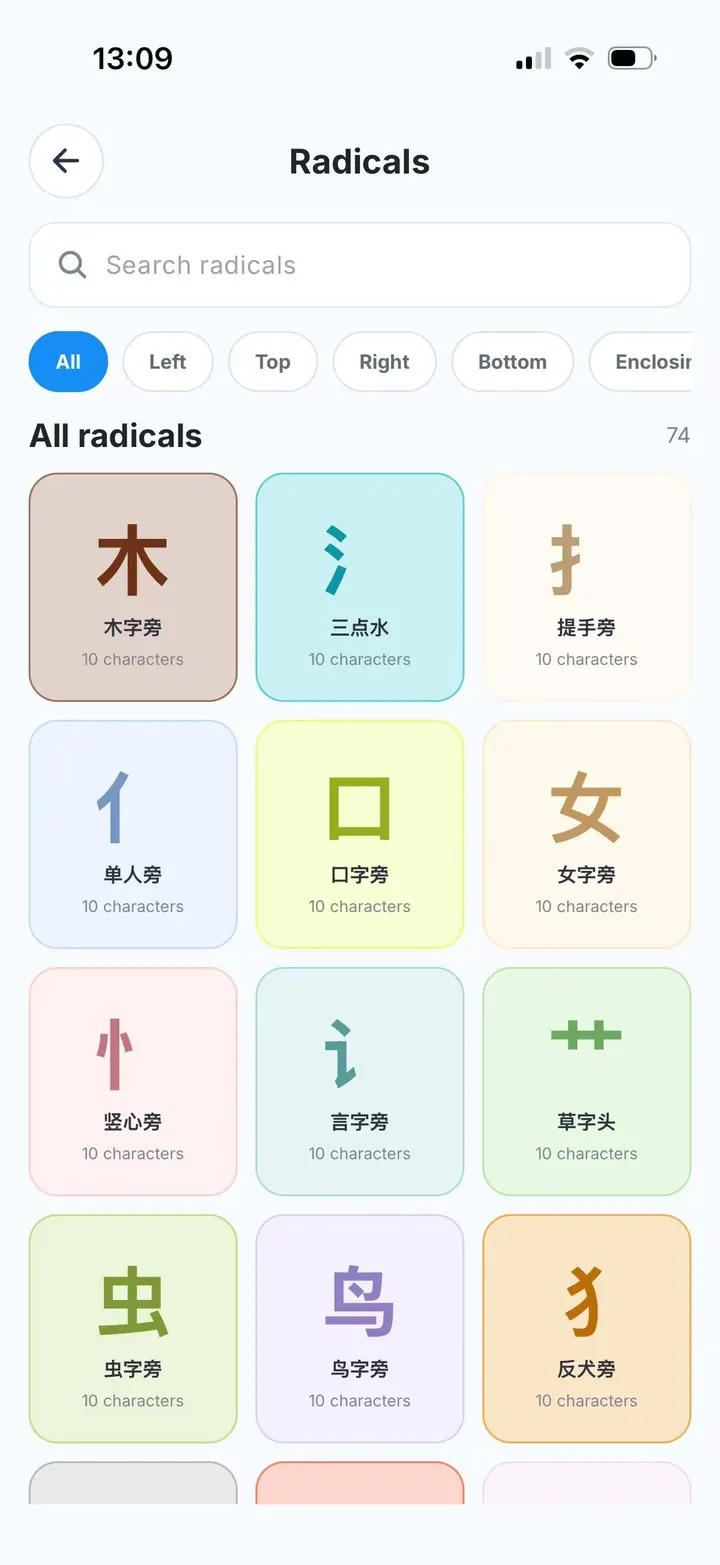
A radical often points toward a broad area of meaning. Characters containing 氵, the water form of 水, frequently relate to liquids, water, washing, rivers, or movement of water. The clue is useful but broad, so it cannot replace learning the full word.
What a phonetic component can tell you
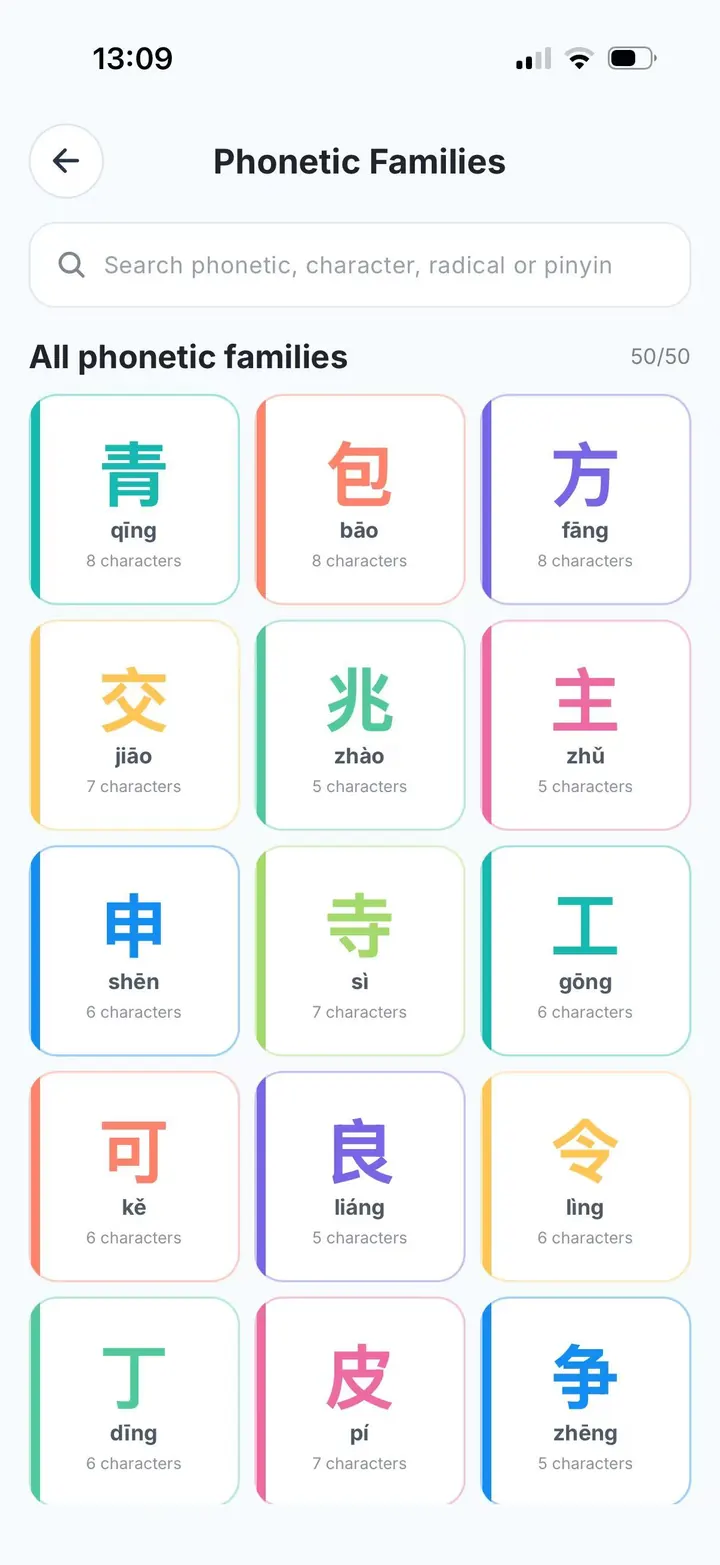
A phonetic component groups characters that historically shared related pronunciations. In modern Mandarin the match may be exact, similar, or no longer obvious because sounds changed over time.
Treat the component as a clue rather than a guarantee. It can help you predict part of a pronunciation and connect several characters into one memorable family.
Semantic and phonetic clues work together
Many characters combine a semantic component with a phonetic component. 妈 contains 女, which relates to the meaning domain, and 马, which suggests the pronunciation. This structure is often called a semantic-phonetic character.
Instead of memorizing 妈 as a collection of seven unrelated strokes, remember it as 女 + 马, then connect it to the spoken word mā. The analysis supports memory, while the complete character, pronunciation, and word usage remain the real learning target.
How to study character families
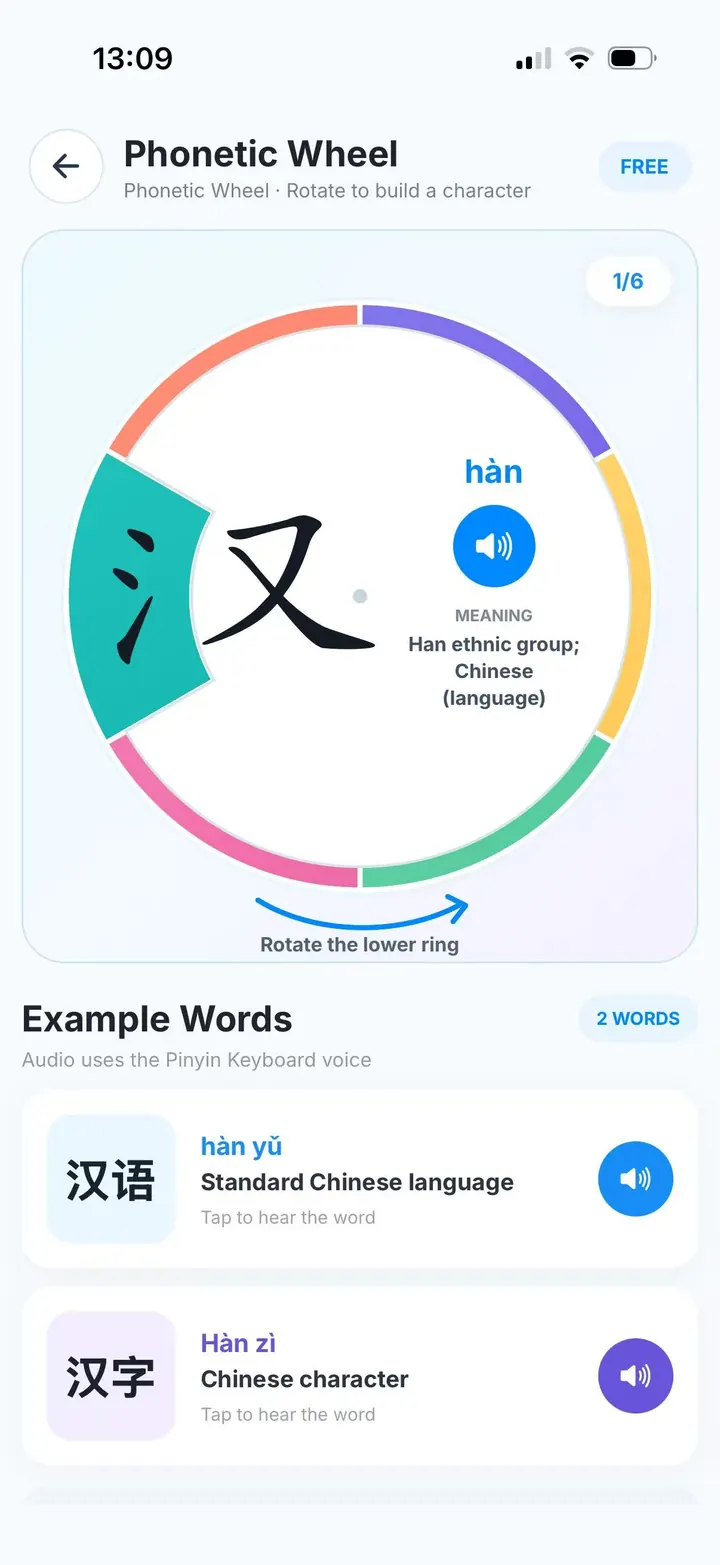
Chivoc’s Radical Pull Cards introduce common radicals through illustrations. Phonetic Wheels then group related characters around a shared sound component, with pinyin, meaning, audio, and example words.
- Identify the recurring component and write its basic meaning or sound clue.
- Compare three to five characters rather than trying to memorize a very large family at once.
- Say each character’s pinyin aloud and mark where tones or initials differ.
- Learn one common word for each character so the component never becomes an abstract puzzle only.
- Review visually similar components side by side to prevent confusion.