
Turn media into practice
From Camera to Conversation: An Everyday Chinese Learning Workflow
Combine scanned text, live audio, video captions, pinyin, and local pronunciation into a focused routine for learning Chinese from daily life.
A menu, a textbook page, a conversation, and a short video can all become Chinese study material. The challenge is not finding more content; it is turning a moment of curiosity into a small amount of language you will actually remember.
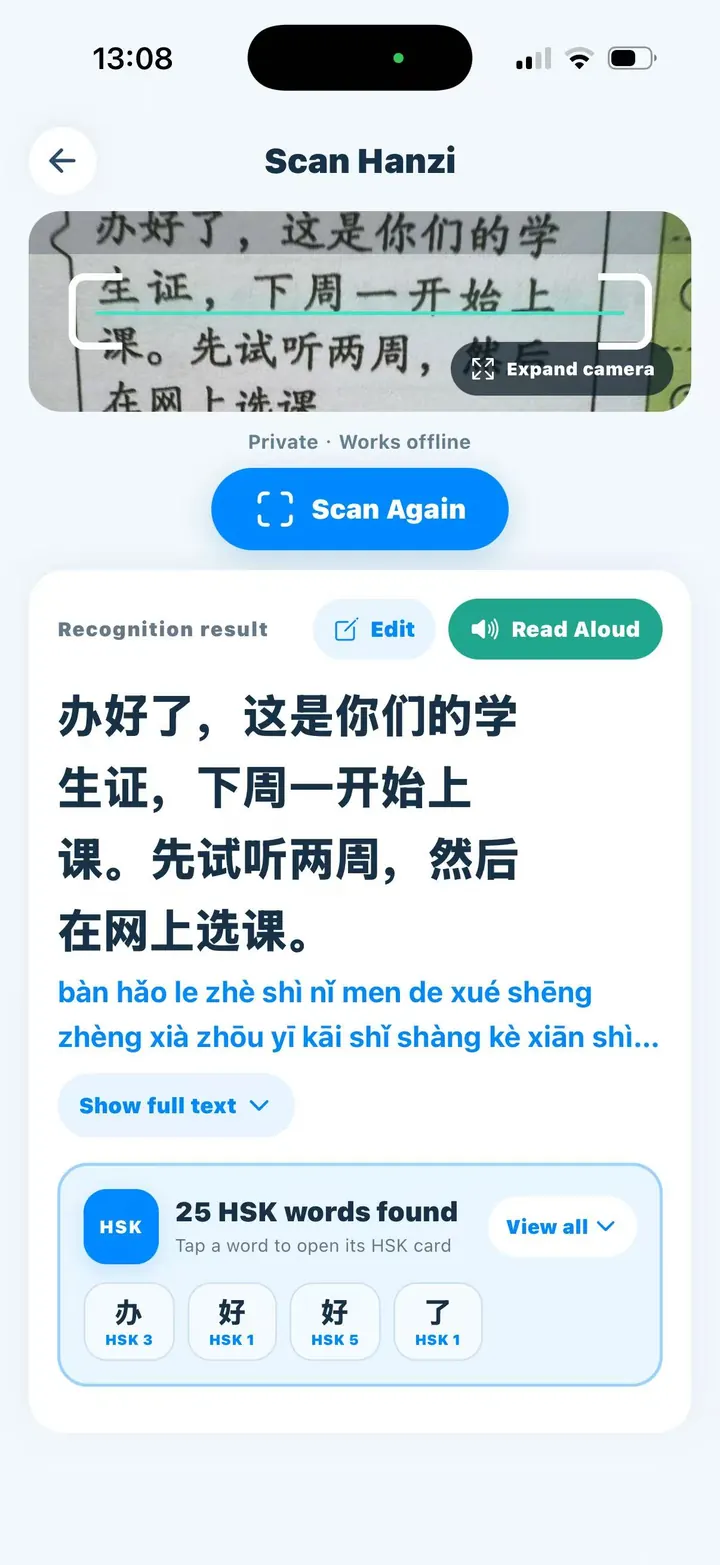
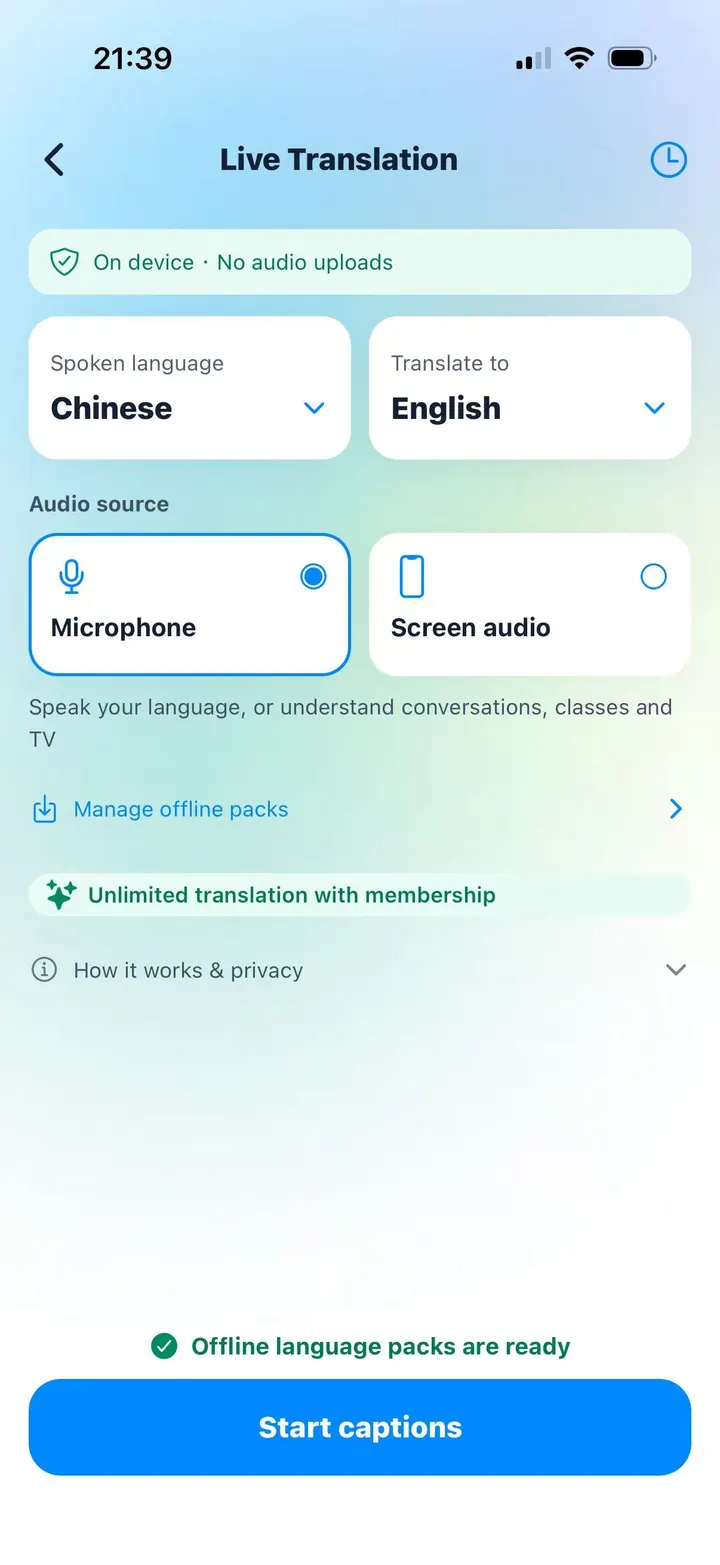
Chivoc’s newer tools support several entry points: Scan Hanzi for printed text, microphone translation for nearby speech, and screen-audio translation for video. Pinyin and local pronunciation connect those inputs to the sounds you need to learn.
Choose the right tool for the source
- Printed Chinese: scan the text, correct recognition, then inspect pinyin and pronunciation.
- A nearby conversation or lesson: use microphone mode and choose the actual spoken language.
- Video in another app: use screen-audio mode and floating captions when the device and content permit it.
- A Chinese result you want to say: play the sentence, divide it into meaningful chunks, and shadow it.
- A useful HSK word: open its learning card for meaning, an example, and further practice.
Reduce every session to three useful items
Do not try to keep every recognized word or translated caption. At the end of a session, choose one word, one phrase, and one complete sentence. Confirm the characters, meaning, pinyin, and audio for each item.
This small selection creates variety without overload. The word builds vocabulary, the phrase teaches a common combination, and the sentence shows grammar and rhythm in context.
Review in three directions
Changing the direction of recall prevents recognition from feeling like mastery. If you can understand a caption but cannot say it, meaning-to-Chinese practice reveals the gap immediately.
- Characters to sound: look at the Hanzi and say it before playing audio.
- Sound to meaning: listen without looking and explain the idea in your familiar language.
- Meaning to Chinese: cover the Chinese, recall the phrase, then compare your version.
Protect attention and privacy
Use short sessions and stop when the tool becomes more interesting than the language. A five-minute clip studied carefully can produce more learning than an hour of unread captions.
Scan recognition and prepared live translation run on the device, but first-time language and audio downloads need a network connection. Check permissions before recording or translating conversations, follow local consent rules, and verify automatic results before relying on them.