
Plan your HSK path
HSK 3.0 Levels Explained: A Clear Study Roadmap
Understand the nine-band HSK framework, what changes between stages, and how to build a realistic vocabulary and skills plan.
The newer HSK framework describes Chinese proficiency across three broad stages and nine bands. It expands the range beyond the familiar six-level model and places greater emphasis on using vocabulary, grammar, characters, listening, speaking, reading, writing, and translation together.
A level label is useful for planning, but it should not replace real communication goals. A balanced learner needs to recognize words, understand them in sentences, hear them at natural speed, and produce them when needed.
Three stages, nine bands
The framework and the test rollout are related but not identical. Before registering for an exam, always check the current format and requirements published by the official test center serving your region.
- Elementary stage: Bands 1–3 establish everyday vocabulary, basic sentence patterns, pronunciation, and character recognition.
- Intermediate stage: Bands 4–6 broaden topic range, increase reading and listening length, and require more precise expression.
- Advanced stage: Bands 7–9 cover complex academic, professional, and cultural communication and are assessed together with different achievement bands.
Vocabulary size is a guide, not the whole target
Word lists help define scope, but knowing a translation is only the beginning. For each important word, learn its pronunciation, common grammatical role, frequent partners, and one natural example sentence.
Chivoc organizes more than 11,000 HSK 3.0 vocabulary items across Bands 1–9. Use the level structure to choose what to study next, while letting mistakes and review results determine what needs more attention today.
A practical weekly study balance
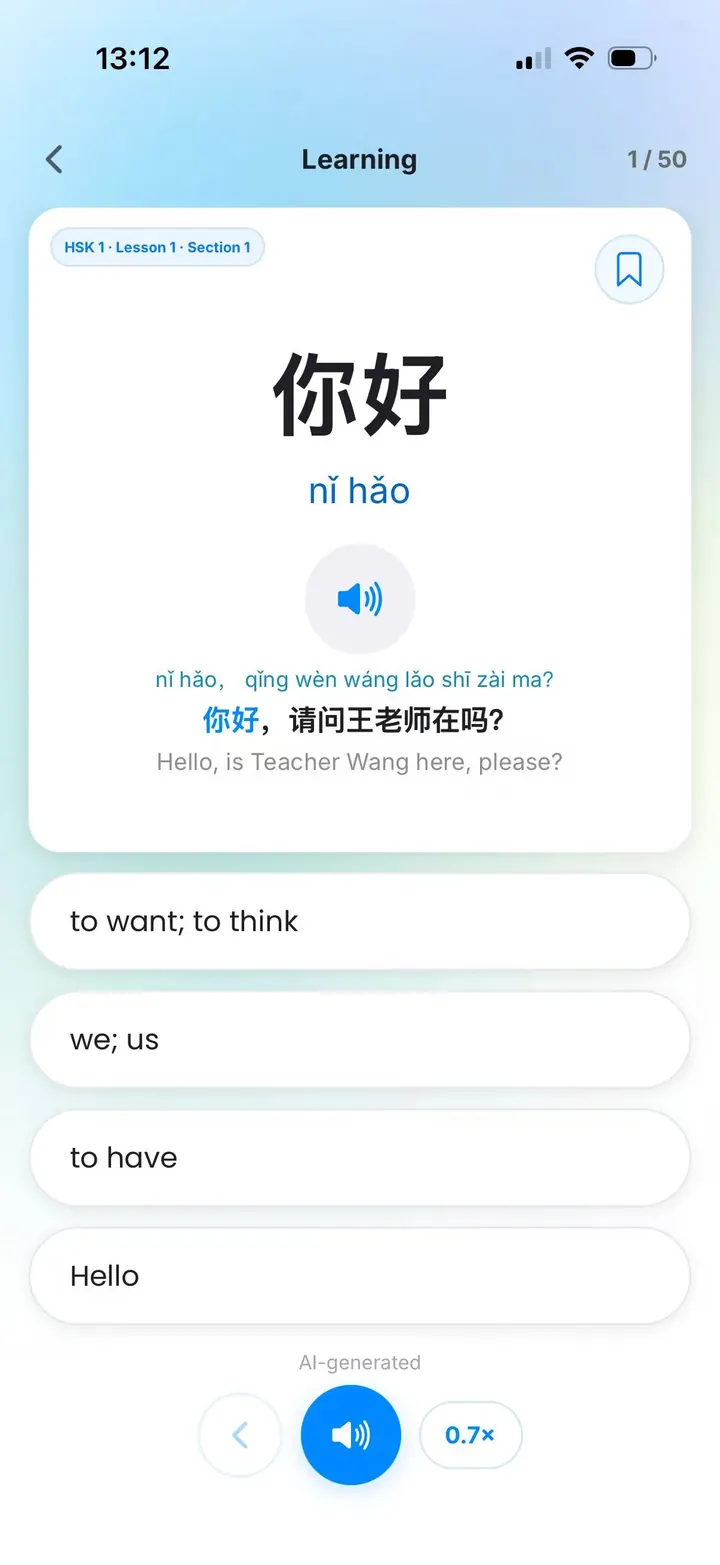
- Learn a small group of new words with pinyin, audio, meaning, and examples.
- Review older words through recognition, listening, spelling, and handwriting rather than one repeated quiz format.
- Read or listen to short material near your current level and mark words that block understanding.
- Write or say a few original sentences using the week’s vocabulary and grammar.
- Keep one lighter day for review so unfinished items do not accumulate indefinitely.
When should you move to the next band?
Move forward when familiar material feels usable, not merely recognizable. You should be able to understand most level-appropriate examples, hear core vocabulary without always reading pinyin, and recall common words in simple output.
You do not need perfect mastery before adding new material. Keep a review loop for weak words while gradually increasing difficulty. Progress is more stable when new learning and spaced review happen together.